A special thank You to Jared Dawson who modeled for the photographs
Whenever I start a new wearable technology project, be it a research study about human factors, or developing a wearable product, I go through a number of checklists in my head to convince myself I have picked the best on-body location. Being that I am an academic, it does not suffice to just say I used common since, so I therefore have to find academic publications that reinforce and validate my decision. As I prepare to finish up my PhD I thought it would be of use to the wearable technology community to pursue a literature review of reasons for on-body location, and synthesize these papers in to visual BODY MAPS and companion design and accessibility considerations. The BODY MAPS, considerations, and reference lists are free to use, just please cite my paper on the subject:
Zeagler, Clint. 2017. “Where to Wear It : Functional , Technical , and Social Considerations in On – Body Location for Wearable Technology 20 Years of Designing for Wearability.” In International Symposium on Wearable Computers. Maui, Hawaii. doi:10.1145/3123021.3123042.
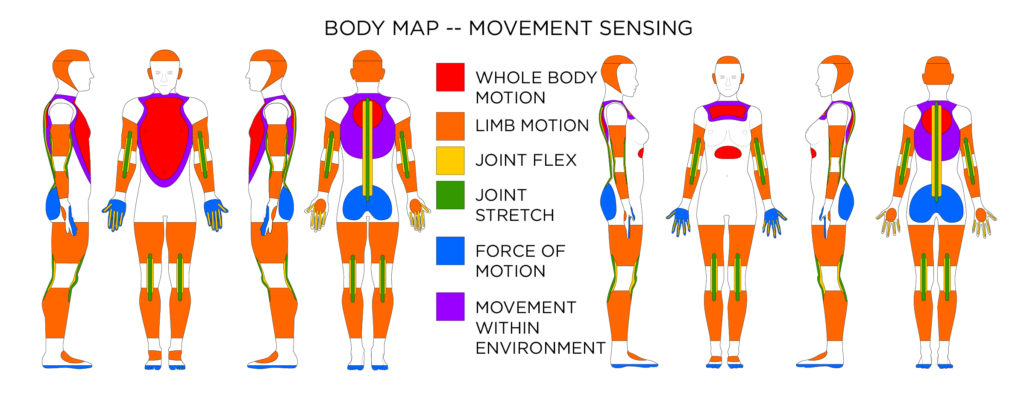
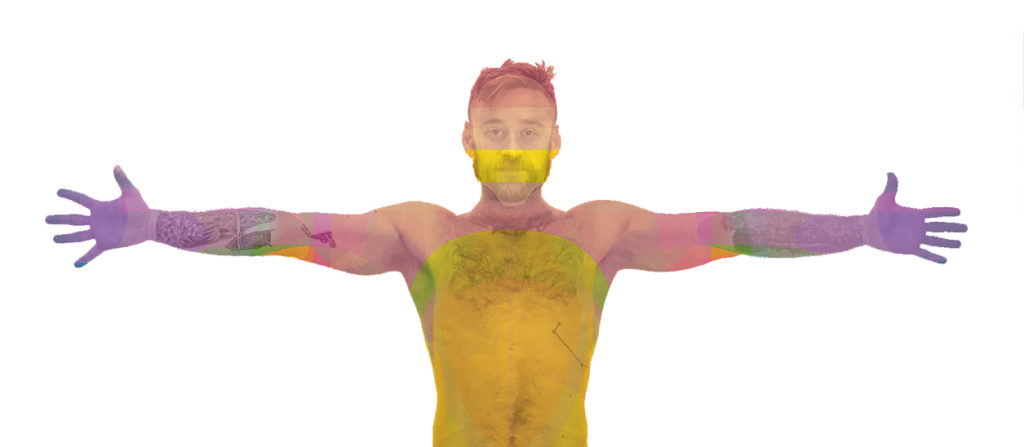
Example BODY MAP: For sensing whole body motion, and limb motion accelerometers, gyroscopes, and magnetometers can be used at locations indicated. For sensing joint movement flex or stretch sensors can be used at locations indicated. Force and explain the impact of movement. If trying to capture movement within an environment, magnetometers (for direction) and barometric pressure sensors (for elevation change) may be used.
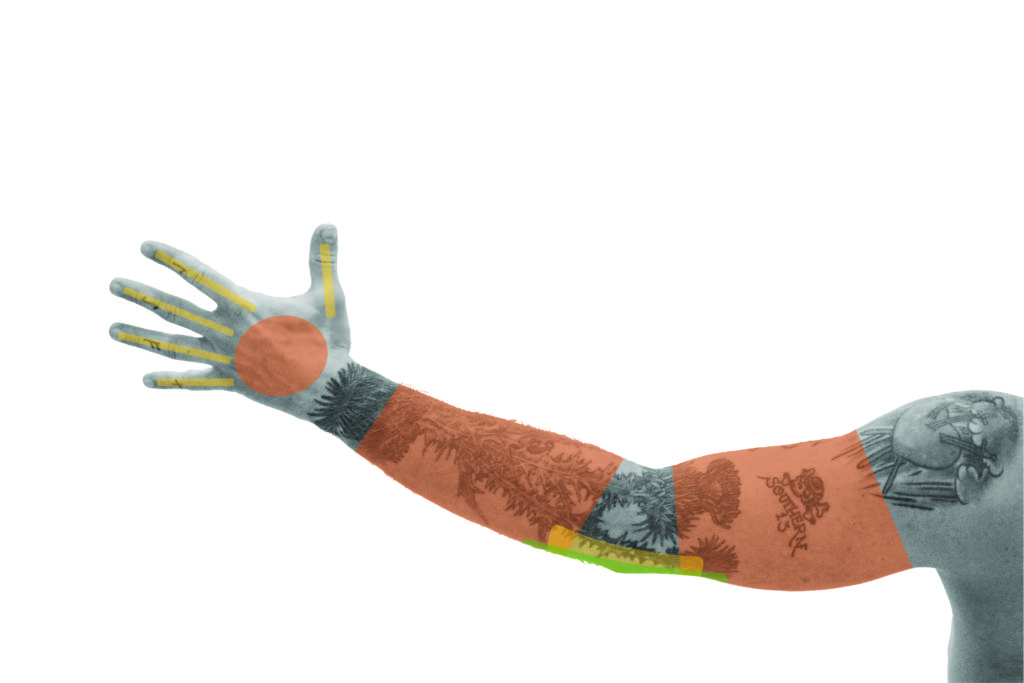
Movement Sensing Body Map placed on actual human model
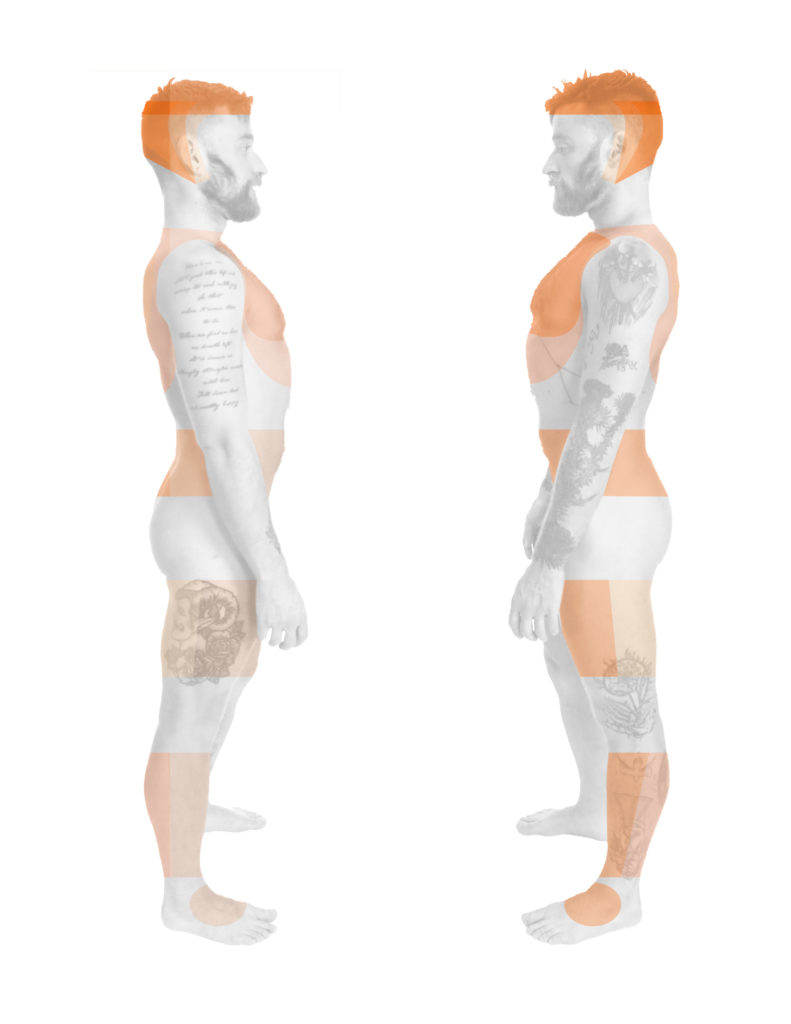
Motion Impedance Body Map placed on a human model.
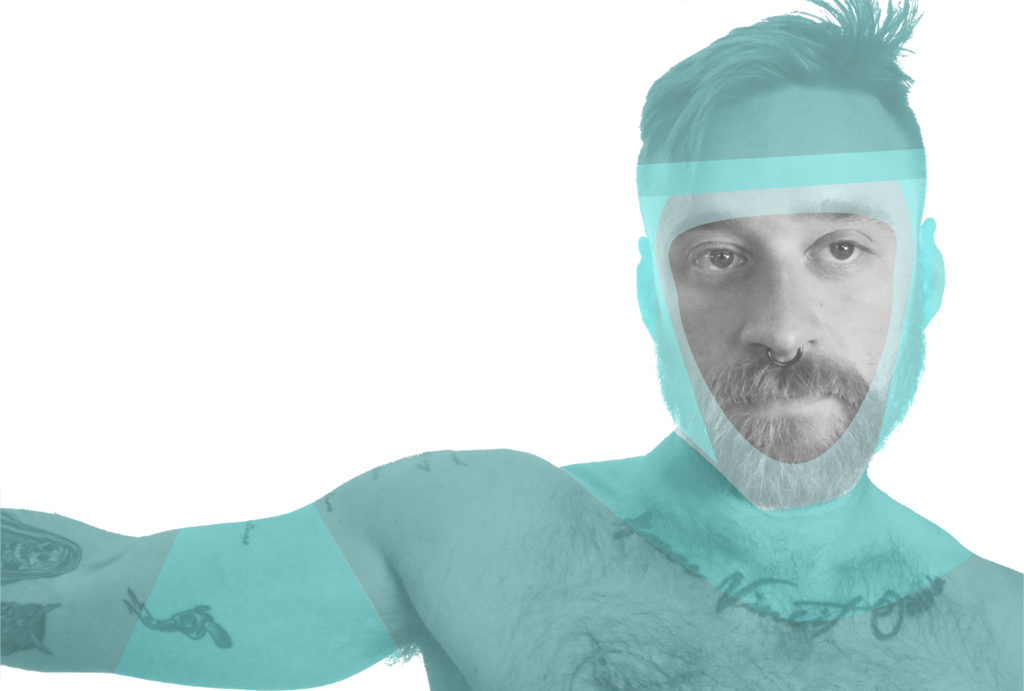
Proxemic Body Map placed on a human model.
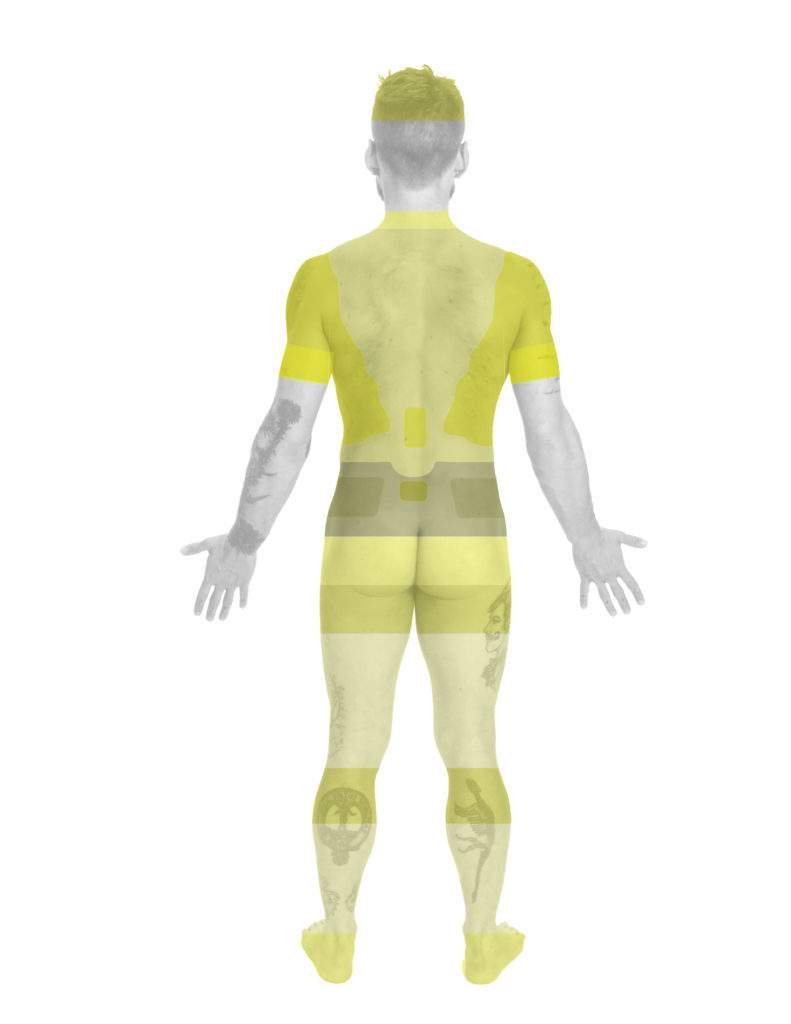
Weight Distribution Body Map placed on a human model.
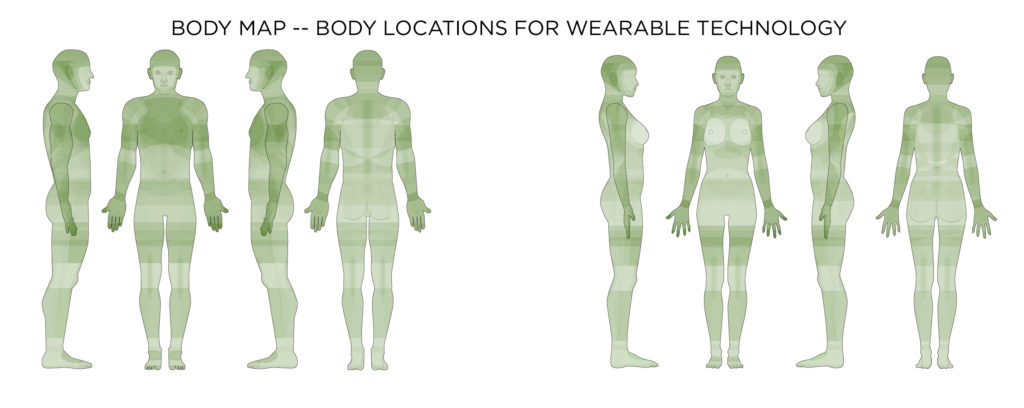
By combining the most frequent reasons for wearable technology, and functional, technical, and social considerations in on-body location with the affordances offered to technology by different locations on the body, a map of current on-body locations for wearable technology can be developed. The darker the green the more likely a device should be placed on the body in the location.